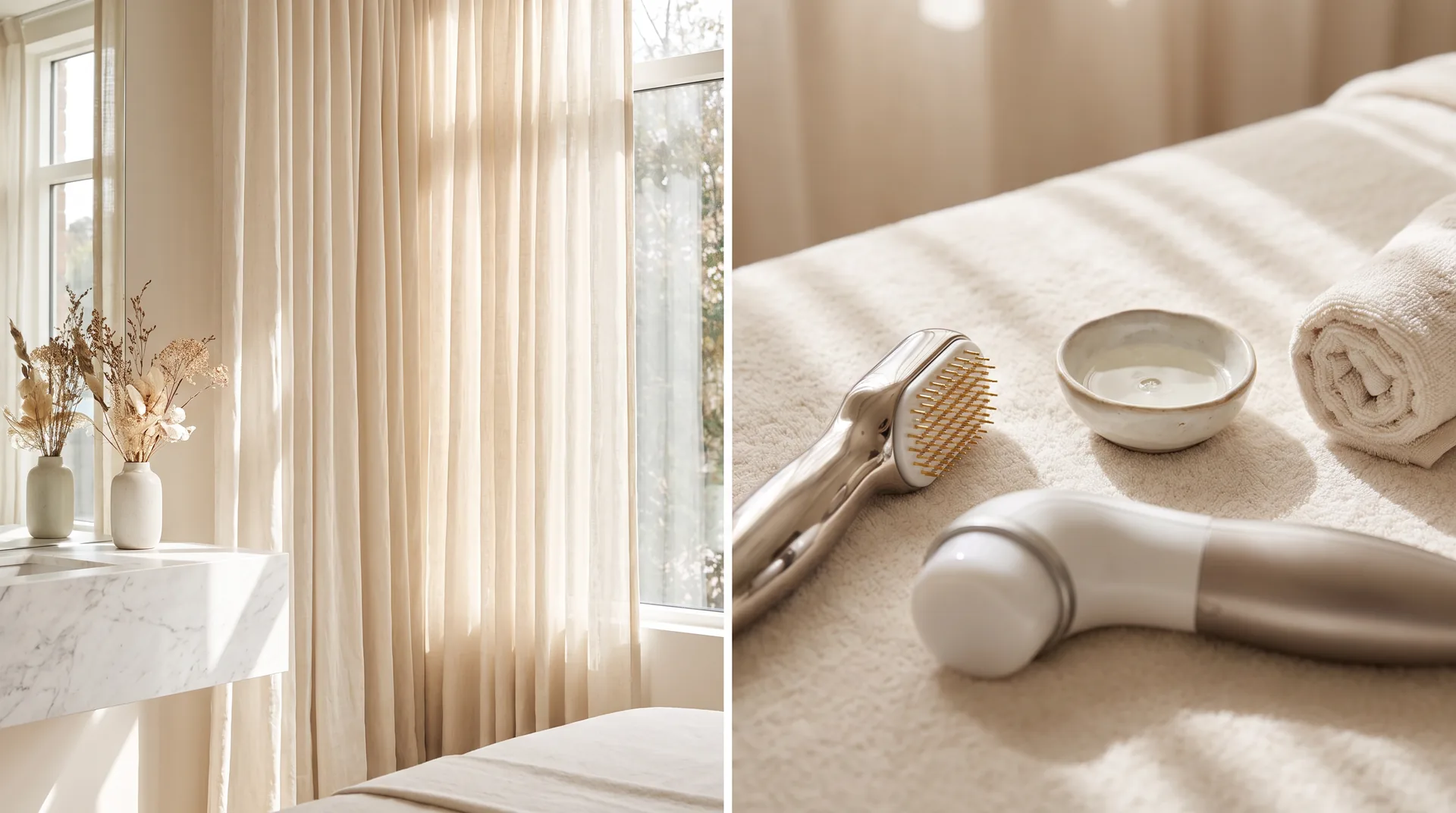
The fundamental difference between Morpheus8 and traditional microneedling comes down to one element: the addition of thermal energy. Traditional microneedling relies strictly on mechanical micro-injuries to encourage superficial skin repair, making it an excellent choice for mild texture issues and overall radiance. Morpheus8, on the other hand, is an FDA-cleared fractional radiofrequency (RF) microneedling treatment that pairs physical micro-punctures with localized heat delivered directly into the deeper dermal and subdermal layers. That thermal energy coagulates tissue and remodels deeper collagen, giving it the ability to tighten mild-to-moderate skin laxity in ways non-thermal microneedling simply cannot match.
Patients often ask if these two treatments are interchangeable. They are not. While both use fine needles to stimulate the body’s natural regenerative processes, they operate at completely different depths and address distinct anatomical layers. Choosing the right one requires looking past the needles and understanding what happens beneath the surface.
Understanding the Mechanical Action of Traditional Microneedling
Traditional microneedling, often called collagen induction therapy, has been a staple in aesthetic medicine for years. During a session of traditional microneedling treatments, a specialized device stamps ultra-fine, surgical-grade needles into the epidermis and upper papillary dermis.
These tiny punctures do not use heat, light, or chemicals. Instead, they create controlled mechanical micro-injuries. Your body recognizes these punctures as tiny wounds and immediately launches an organized wound-healing cascade. Platelets release growth factors, fibroblasts migrate to the area, and the skin begins laying down fresh type III collagen, which eventually matures into stronger type I collagen. Over the following weeks, this cellular turnover smooths the upper layers of the skin.
Because traditional microneedling is purely mechanical, it is gentle on the skin’s architecture. It is ideal for patients who want to soften superficial fine lines, minimize the look of enlarged pores, and gently refine rough surface texture. However, because it does not generate heat and stays relatively superficial, it cannot remodel deep structural tissues or contract loose skin.
The Dual-Action Power of Morpheus8 Fractional RF Microneedling
When loose skin or deeper textural defects are the main concern, mechanical puncturing alone often falls short. This is where Morpheus8 fractional RF microneedling enters the picture.
Morpheus8 combines the mechanical action of microneedling with fractional radiofrequency energy. As the micro-pins enter the skin, they emit an electrical current that travels between the tips, generating controlled resistance within the tissue. This resistance converts directly into therapeutic heat.
In the peer-reviewed medical literature, including the comprehensive clinical review “Radiofrequency Rejuvenation of the “Tweener”… : Facial Plastic Surgery,” RF microneedling is detailed as an effective approach to facial rejuvenation because it delivers electrothermal energy right where collagen synthesis is most active, all while largely sparing the upper epidermis. The needles serve as insulated or semi-insulated conduits, ensuring the heat is placed at the exact depth needed rather than scorching the surface.
How Radiofrequency Energy Deepens Subdermal Remodeling
To understand why heat matters so much, it helps to look at how collagen behaves under thermal stress. When dermal collagen fibers are heated to a specific therapeutic temperature, they undergo immediate physical denaturation. The triple-helix structure of the collagen fiber unwinds slightly and contracts.
That thermal contraction triggers a much more robust remodeling signal than mechanical needle pricks can produce on their own. The body does not just patch tiny pinpricks; it actively remodels the cellular matrix over an extended period. Fibroblasts are stimulated to produce substantial new collagen and elastin, strengthening the dermal architecture from deep within.
Research published in “Multimodal Radiofrequency Application for Lower Face and Neck Laxity” highlights how this fractional delivery of RF energy achieves measurable tightening in areas vulnerable to gravity, such as the lower face and submentum. By delivering energy directly into the tissue, providers can achieve meaningful contraction without the prolonged recovery times linked to aggressive fully-ablative surface lasers.
Targeting Structural Tissue Beyond the Epidermis
Depth is another critical differentiator between the two treatments. Standard microneedling devices generally operate at depths between 0.5 mm and 2.0 mm, which targets the epidermis and the upper dermal layers. This works well for superficial polishing, but the underlying structural supports of the face lie further down.
Morpheus8 is engineered to reach deeper subdermal planes. It can penetrate into the deep reticular dermis and the fibroseptal network, the connective tissue scaffolding that tethers the skin to underlying structures. By heating these deeper tissue bands, Morpheus8 provides structural remodeling that can tighten mild-to-moderate laxity along the jawline, underneath the chin, and across regions of the body.
Comparing Clinical Indications: Surface Texture vs. Tissue Laxity
Deciding between Morpheus8 and traditional microneedling depends largely on your primary aesthetic concerns and the anatomical depth of the issue.
Traditional microneedling is usually the better fit for:
- Early signs of aging and fine surface crinkling
- Superficial pore congestion and rough texture
- General skin maintenance and radiance
- Patients seeking a mild treatment with faster post-procedure recovery
Morpheus8 fractional RF is typically recommended for:
- Mild-to-moderate skin laxity along the lower face and jawline
- Crepiness or loose skin on the neck and submentum
- Moderate to deep atrophic acne scarring that requires tissue remodeling
- Deep folds, such as nasolabial lines, that stem from structural laxity
- Body areas that require targeted tissue tightening and remodeling
Here is an essential distinction: neither treatment replaces a surgical facelift. If a patient presents with significant skin redundancy, severe jowling, or heavy platysmal banding, non-surgical energy devices cannot replicate the outcomes of an operative procedure. Being candid about what non-invasive technology can and cannot accomplish is essential. For mild-to-moderate laxity, however, Morpheus8 provides noticeable structural refinement without surgical incisions.
Skin tone is another point worth knowing. Traditional microneedling is generally safe across all Fitzpatrick skin types because mechanical punctures carry minimal risk of heat-induced pigment disruption. Morpheus8 is also well-tolerated across diverse skin tones because its pins deliver RF energy underneath the melanin-producing melanocytes in the epidermis. Even so, selecting the correct energy settings and needle depths is critical for minimizing the risk of post-inflammatory hyperpigmentation.
Recovery and What to Expect After RF Treatment
Because traditional microneedling creates only superficial mechanical wounds, recovery is straightforward. Patients typically experience moderate redness and a sensation similar to a light sunburn for 24 to 48 hours, followed by mild dryness or flaking that resolves quickly.
With Morpheus8, the addition of thermal radiofrequency energy means the tissue undergoes deeper coagulative changes. Most patients plan for redness, swelling, and a temporary grid-like texture on the treated skin that settles over several days. You may also feel moderate warmth or tenderness in the treated area during the first day or two.
Neither treatment produces instant final results. With traditional microneedling, a fresh glow often appears within one to two weeks as the top layer of skin turns over, with subtle collagen building continuing for a few months. With Morpheus8, while an immediate tightening effect can occasionally be noticed from collagen contraction, the true structural remodeling takes time. Results continue to refine over the following weeks as new collagen and elastin mature.
Both treatments are usually performed as a short series spaced several weeks apart to achieve optimal clinical benefits. Your exact schedule and total session count depend on baseline tissue quality, treatment area, and personal goals.
Choosing the Right Skin Rejuvenation Approach for Your Goals
If your primary goal is refreshing your complexion, smoothing superficial rough patches, or reducing the look of pores, traditional microneedling is a proven, reliable option with minimal downtime. It provides dependable maintenance for healthy skin without unnecessary depth or intensity.
If you are noticing early sagging along the jawline, skin laxity on the neck, or deeper textural depressions that require structural support, the thermal energy of Morpheus8 fractional RF microneedling offers the depth and coagulative power necessary to stimulate meaningful tissue remodeling.
At Premier Med Spa of Lake Oswego, all aesthetic care is physician-led under board-certified medical direction. Our clinical team works closely with you to examine your skin’s anatomy, discuss your personal schedule and tolerance for downtime, and design a treatment plan tailored to your specific goals.
If you are ready to explore whether Morpheus8 or traditional microneedling is the right match for your skin, you can schedule a consultation to get started on an individualized treatment plan.
Individual results vary.